> For the complete documentation index, see [llms.txt](https://help.digits.com/llms.txt). Markdown versions of documentation pages are available by appending `.md` to page URLs; this page is available as [Markdown](https://help.digits.com/firms-agentic-general-ledger/locations.md).
# Locations
Locations allow you to segment your client's books by geography, region, or site so you can track performance across different places thier business operates.
***
{% stepper %}
{% step %}
### Step 1: Set up your Locations
1. Go to **Accounting** → **Locations** in the left-hand menu.
2. Click **New Location** to create one manually.
If your firm is connected to **QuickBooks Online (QBO)**, you can also import your existing structure:
3. Click **Import Locations** to bring in locations from QBO’s **Line Class** or **Location** fields.
{% hint style="warning" %}
In QBO, “Location” may appear under a custom name (for example: *Territory*, *Region*, or *Department*).
You won’t see the **Import Locations** option unless your firm is connected to QBO.
{% endhint %}
{% endstep %}
{% step %}
### Step 2: Organize Your Locations
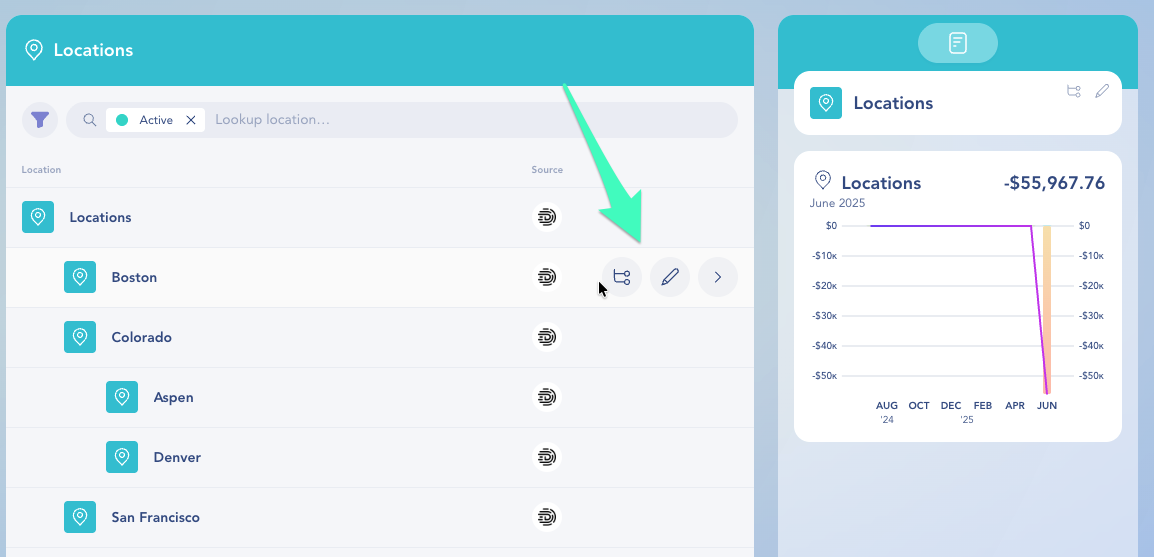
You can organize locations into a hierarchy as needed (for example, California → San Francisco).
To make changes, hover over a location name to:
1. Click the **Pencil** to rename or modify the location.
2. Click the **Hierarchy** icon to add a child location.
{% hint style="danger" %}
**Note**: Editing is not available for locations imported from QBO.
{% endhint %}
{% endstep %}
{% step %}
### Step 3: Tag transactions with a Location
Once your locations are set up, you can start tagging transactions.
**To tag one transaction:**
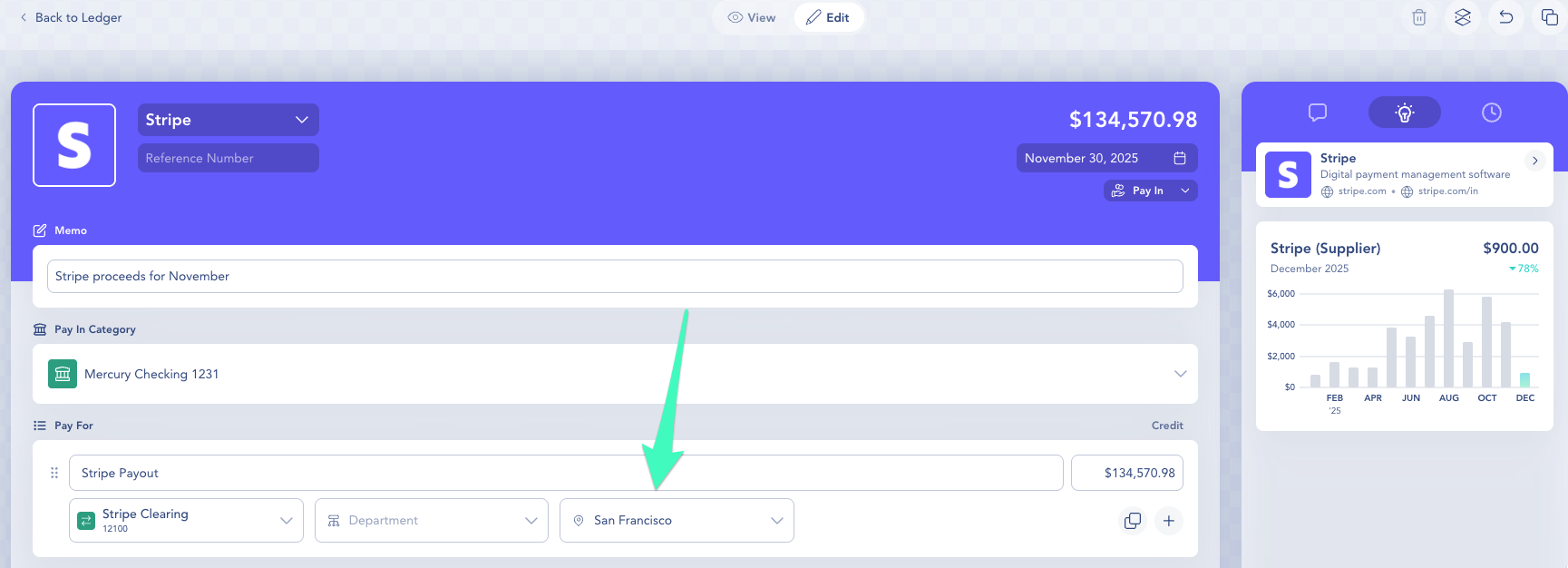
1. Go to **Accounting** **→** **Ledger**.
2. Click into a transaction.
3. Click **Edit** at the top of the screen.
4. Use the **Location** field to assign a tag.
**To tag one or more transactions at once (Bulk Tagging):**
1. From the **Ledger**, click **Edit** at the top.
2. Check the boxes next to the transactions you want to tag.
3. Click the **Location** icon in the toolbar at the top.
4. Select the location from the dropdown.
5. Click **Apply** to save your changes.
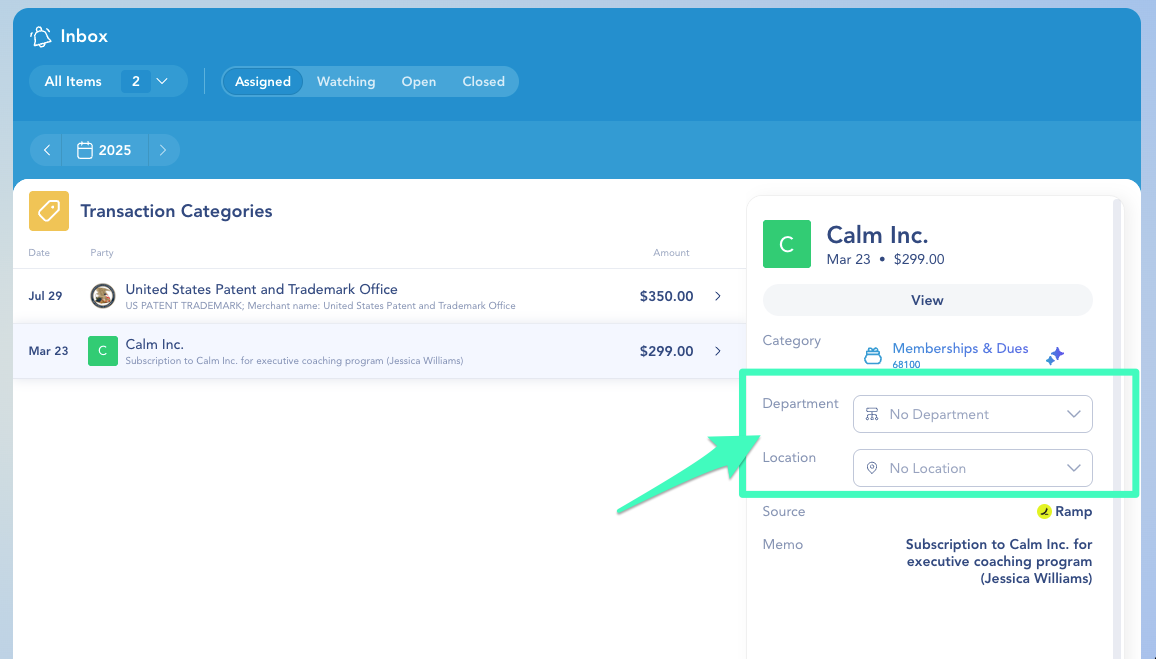
**Tag directly inside Checklist action items:**
When reviewing a transaction from your **Checklist**, you’ll see **Location (and Department) dropdowns** right next to the Category field.
{% hint style="info" icon="lightbulb-on" %}
✨ Once you've set up Locations, Digits will auto-assign Locations to transactions based on learned patterns. Anything Digits isn't sure about is surfaced in the **Checklist** for review, so you stay in control.
{% endhint %}
{% hint style="info" %}
**Tip:** Unsure about the right location? You can leave a comment or question on any transaction to confirm with a teammate or accountant.
{% endhint %}
{% endstep %}
{% step %}
### Step 4: Report by Location
After transactions are tagged, you can view location-level reporting.
**To view Profit & Loss by Location:**
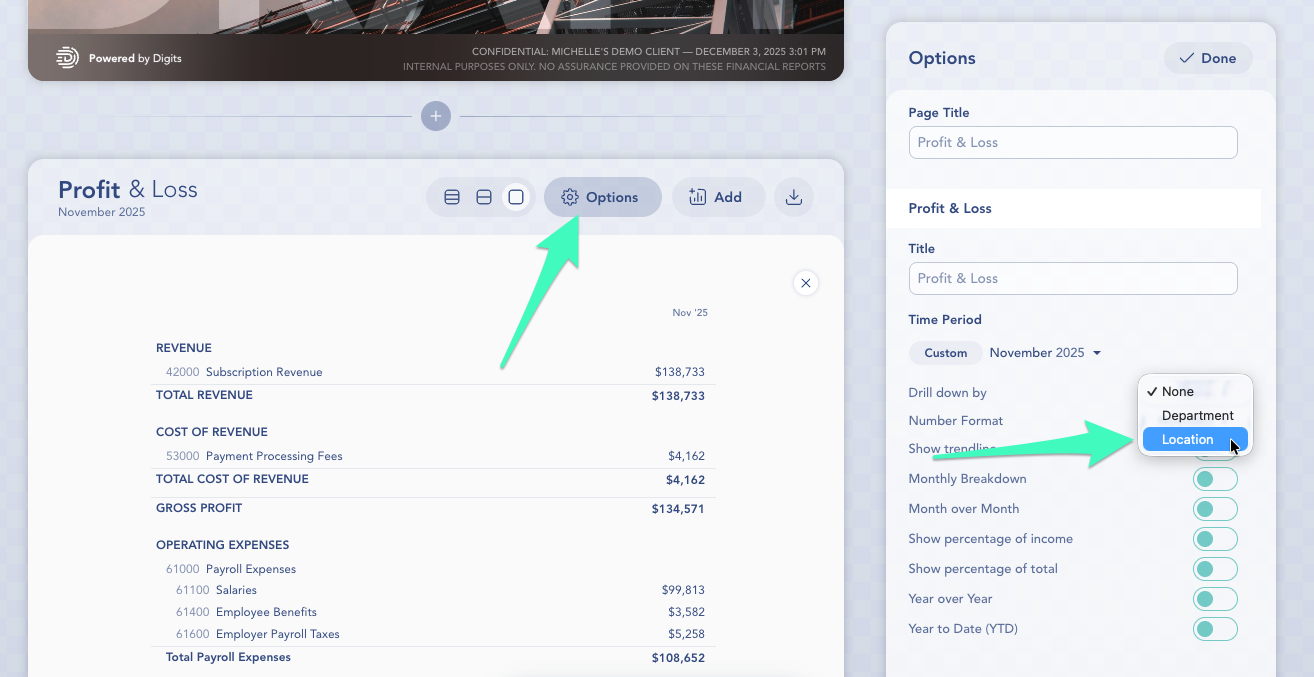
1. Go to **Custom Reports → Profit & Loss**.
2. Click the **Options icon** at the top of the report.
3. Click the dropdown next to **Drill down by** and select **Location**.
This lets you filter and break down P\&L reports to compare revenue and expenses across locations.
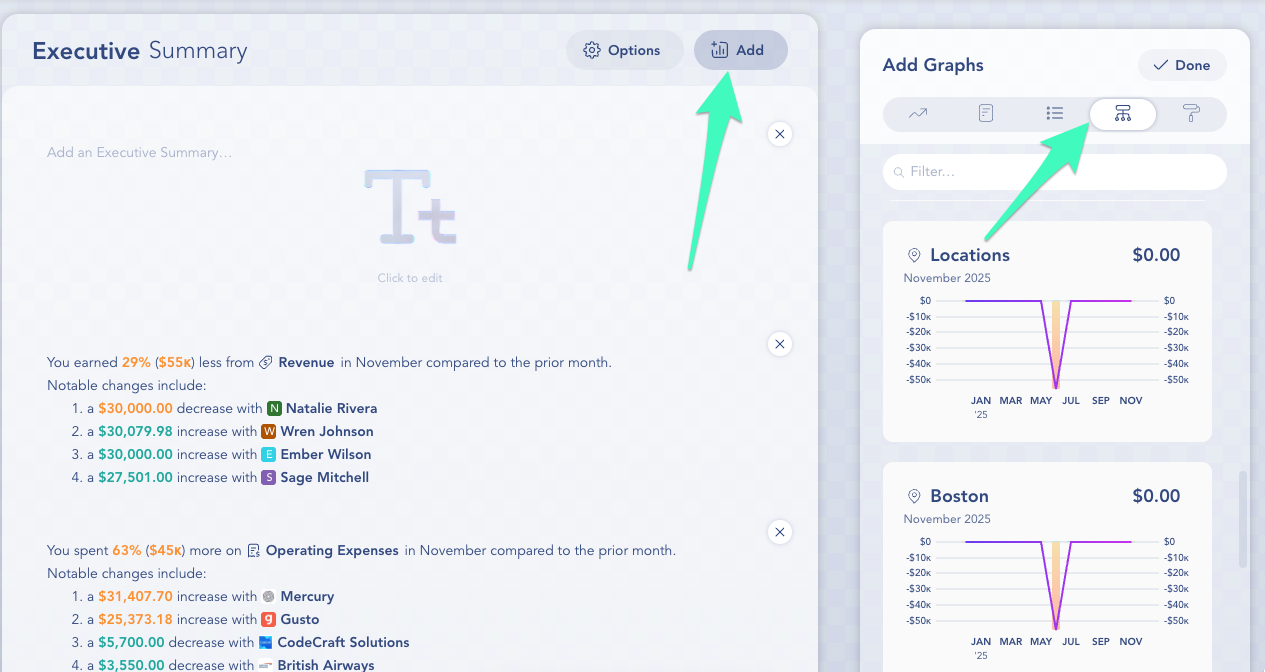
**You can also add location-specific widgets to Reports:**
1. Go to any **Custom Report** (like Executive Summary).
2. Click **Add** at the top of the report.
3. Select the **Hierarchy** tab in the **Add Graphs** panel.
4. Choose from available location-based graphs.
5. Add your desired widget(s), then click **Done**.
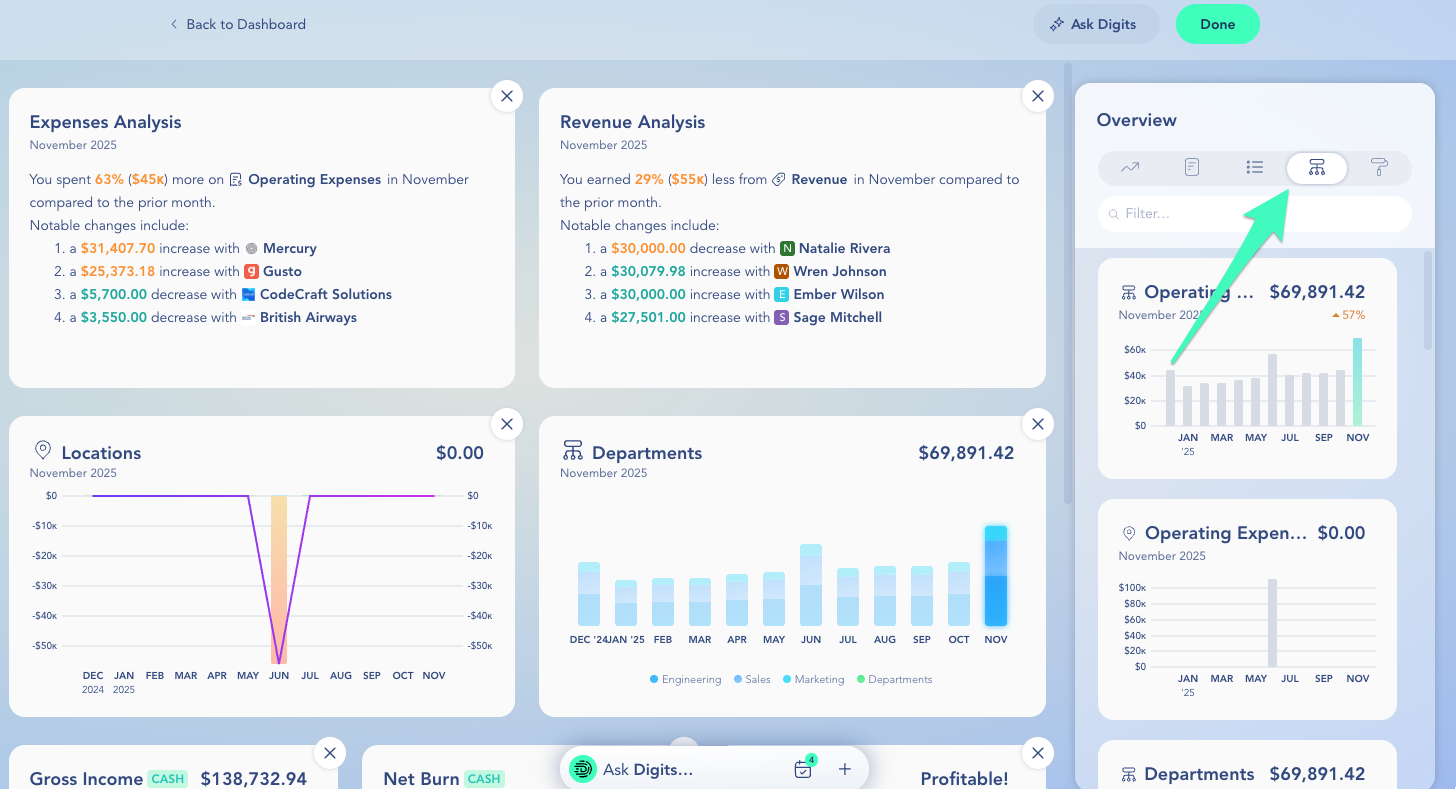
**To add location charts to your Custom Dashboard:**
1. From **Home**, click **Edit** in the top-right corner.
2. Click the **Hierarchy** icon in the chart selector panel.
3. You’ll see available charts for each location.
4. **Drag and drop** the ones you want onto your dashboard.
5. Click **Done** to save your changes.
{% hint style="info" %}
**Note:** Location charts currently use **transaction data for Expenses and Income.**
You *can* still tag other transaction types (like **Assets or Liabilities**) with a Location for filtering and review, but these will **not** appear in Location dashboard charts or balance-sheet drill-downs yet.
{% endhint %}
{% endstep %}
{% endstepper %}
***
### Frequently Asked Questions
Can I import transactions with Departments and Locations?
**Yes!** You can import transactions with **Departments** and/or **Locations**. Here’s how it works, depending on how you import:
#### CSV import
If you use the Digits CSV template, include a **Department** and/or **Location** column.
* **If the Department/Location already exists in Digits,** Digits applies it during import.
* **If it doesn’t exist:** Digits creates a **new Department or Location** in your **Dimensions** list and tags the transaction.
* **If Digits can’t create or apply it:** The transaction imports **without a tag** (and it won’t go to the Checklist). No stress — you can tag it later in the Ledger, either one at a time or in bulk.
#### Statement import (PDF/PNG/JPG/JPEG)
Transactions imported from a bank statement also go through Digits’ AI categorization flow.
* If Digits has seen **past Department/Location patterns** on similar transactions, it will try to apply them during import.
* If Digits can’t create or apply a dimension, the transaction imports **without a tag** (and it won’t go to the Checklist). You can tag it later in the Ledger — individually or with bulk edit.
Can I report by both Location and Department at the same time?
Not yet. Today, you can drill down by either Location *or* Department per report. Multi-dimensional P\&Ls (using both) are on the roadmap.
Will Locations import automatically from QuickBooks Online, or do I have to create them manually?
If your Digits account is connected to QBO, you can import Locations just like Departments. Digits can pull from QBO’s **Location** or **Line Class** fields, depending on how your file is set up. You can also choose to skip import and build your Locations structure manually in Digits.
Can I view Departments and Locations on Balance Sheet reports?
Not yet. Department and Location breakdowns are currently available only in Profit & Loss reports.
Will Departments/Locations sync automatically from connected tools like Ramp or Gusto?
**Ramp:** No — Departments/Locations do **not** sync from Ramp into Digits automatically.\
**Gusto:** **Departments do sync from Gusto** (Departments only — **not** Locations).
Why don't I see Locations?
Locations are available on select plans (part of Digits' Dimensions feature, along with Departments). If you don't see Locations, Dimensions isn't included in the current plan. To add it, upgrade the client's plan — see [Upgrade or downgrade a client plan](https://help.digits.com/client-management/upgrade-downgrade-a-client-plan). For the plans that include Dimensions, see [Digits pricing](https://digits.com/pricing/#firms).
*If Dimensions is included but you don't see any locations yet, you may just need to create them first.*
Is there a limit on how many Locations I can create?
No. There's no fixed limit on the number of Locations you can create or how many levels you can nest.
For reporting, you can compare up to six Locations at a time side by side on a Profit & Loss report. To compare additional Locations, run another report. This reporting limit doesn't affect how many Locations you can create or use.
If I report on a parent Location, does it include its child Locations?
Yes. When you filter or drill into a report by a parent Location, Digits automatically includes everything assigned to its child Locations.
For example, with a hierarchy of Market → Property → Unit, a P\&L filtered to a Market includes transactions assigned directly to that Market, plus everything assigned to its Properties and their Units.
Filtering to a single Property or Unit narrows the report to that branch only.\
Assign transactions at the most specific level that makes sense, usually at the Unit or Property level. Parent-level reports automatically roll those amounts up.
***
{% columns %}
{% column width="66.66666666666666%" valign="middle" %}
Got a question or feedback? Our team is all ears—come say hello!
{% endcolumn %}
{% column width="33.33333333333334%" valign="middle" %}
{% endcolumn %}
{% endcolumns %}
***
---
# Agent Instructions
This documentation is published with GitBook. GitBook is the documentation platform designed so that both humans and AI agents can read, navigate, and reason over technical content effectively. Learn more at gitbook.com.
## Querying This Documentation
If you need additional information that is not directly available in this page, you can query the documentation by asking a question.
Perform an HTTP GET request on the following URL with the `ask` and `goal` query parameters:
```
GET https://help.digits.com/firms-agentic-general-ledger/locations.md?ask=&goal=
```
`ask` is the immediate question: it should be specific, self-contained, and written in natural language.
`goal` is what the user is ultimately trying to achieve, the reason they need the answer. Sharing it helps GitBook give you a better, more relevant answer. A goal is most helpful when it describes the outcome the user wants rather than restating the question. For example, with `ask=how do I create an API token`, a goal like `automate deployments from our CI pipeline` lets GitBook tailor the answer to that use case.
The response will contain a direct answer to the question and relevant excerpts and sources from the documentation.
Use this mechanism when the answer is not explicitly present in the current page, you need clarification or additional context, or you want to retrieve related documentation sections.